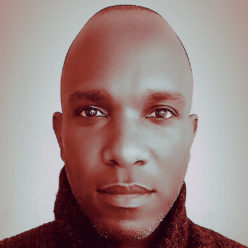
Twenty-six books, twenty albums and nearly three decades of independent creative work. From poetry and spoken-word music to publishing and film, PHOENIX JAMES has developed an artistic practice that has never been confined to one medium or conventional route.
In this conversation, he reflects on the experiences, decisions and ideas that have shaped his creative philosophy, exploring artistic independence, creative evolution and the possibilities of working without boundaries.
Your creative output spans twenty-six books and, by your latest count, twenty albums. How do you approach the relationship between the written and recorded forms, and what determines which direction a particular idea takes?
For me, the distinction is less rigid than it might appear. I don’t really begin with the thought that I am going to make a book or an album. I begin with an idea, a body of words, a feeling, a question or a particular creative impulse, and then I discover what form it wants to take.
I have always thought of poetry as something that can exist beyond the page. Some pieces want silence around them and belong in a book. Others want rhythm, atmosphere, voice and movement, so they become recorded work. Sometimes the same idea can exist successfully in both places, but it becomes a different object when it moves from page to performance or recording. I suppose the simplest answer is that I don’t decide entirely in advance. The work usually tells me what it needs to become.
Looking back to your beginnings as Phenzwaan in 1998, how has your understanding of spoken word changed, and what would surprise that younger performer about the way you approach your work today?
The young performer I was in 1998 believed, perhaps more than anything, that the performance itself had to prove the value of the words. I was very conscious of the stage, the audience, the energy in a room and the need to make people feel something immediately. That was important to me, and it taught me a great deal.
I don’t think I believe any longer that a piece has to announce its importance. I have become much more interested in what remains after the performance has ended. A poem can be quiet and still be powerful. A sentence can stay with somebody for years without ever being shouted. The younger Phenzwaan wanted to conquer the room. Phoenix James is more interested in creating something that can outlive the room.
Independent publishing has been central to your career since the beginning. How did that independence develop, what have been its demands, and what has it allowed you to retain that might otherwise have been compromised?
It began partly because I wanted to get the work into the world rather than wait for somebody else to give me permission. I was already performing and recording independently in the late 1990s, and by 2000 I was releasing my own recorded work. My first book followed in 2003. Eventually self-publishing stopped feeling like an alternative to something else and simply became the way I worked.
It has cost me things. There is a financial cost, obviously, but there is also the cost of having to learn everything yourself: production, distribution, presentation, metadata, promotion, administration, archiving and all the unglamorous things that sit behind creative work. But it has protected something I value enormously: ownership. I have been able to decide what gets made, when it gets made, how it is presented and how the work develops without having to make the work fit somebody else’s idea of what Phoenix James should be. That independence has become part of the art itself.
Your work moves between the printed page and recorded performance. What changes when a poem moves from one medium to the other, and how do you understand the different experiences each form offers its audience?
I don’t think I can nominate one piece as having simply lost something when it was printed, because the page reveals things that performance can conceal. On stage, rhythm, timing, voice, silence, facial expression and physical presence can carry part of the meaning. On the page, the reader has to encounter the architecture of the words directly.
Some of my performance work was born for the room and inevitably changes when it becomes text. But the reverse is also true. Some pieces become more interesting on the page because the reader can stop, return to a line, sit with an idea and discover something that might pass in a live performance.
That difference is actually one of the reasons I have continued working across both forms. I don’t see the book and the recording as competing versions. They are different ways of experiencing the same creative universe.
Having worked both independently and within major film productions, including Skyfall and Star Wars: The Force Awakens, how have those contrasting environments shaped your understanding of creative collaboration, responsibility and your own place within a larger production?
It teaches you scale, discipline and perspective. When you make almost everything yourself, it is easy to become completely absorbed in your own creative universe. Then you walk onto a production like Star Wars and suddenly you are one small part of something involving enormous numbers of people, departments, systems and decisions.
I actually found that fascinating. You learn that your individual contribution matters. You have to understand your role, do it properly and trust the people around you. I grew up loving Star Wars, so becoming a Stormtrooper was genuinely a dream come true for me. But the experience also reinforced something I already understood from making my own work: whether you are working alone or inside a huge machine, you still have to take the opportunity seriously and do the best work you can with the part you have been given.
Ultimately, I’ve learnt equally valuable things from both experiences. Working independently gives you freedom, ownership and the ability to move according to your own instincts, but it also means carrying the responsibility for almost every decision yourself. Working within a large production gives you access to resources, expertise and a collective vision, but it also means accepting that you are contributing to something whose direction and outcome are not entirely yours to determine. There is a trade-off with both, and there are advantages to both.
With Unarrived marking another chapter in a career that has produced twenty albums, what does this latest work reveal about where you are creatively and personally, and how does it differ from the work you might have made a decade ago?
Unarrived is about being somewhere between what has already happened and whatever comes next. The title came to feel increasingly appropriate because I don’t think life is as neatly divided into arrivals and departures as we sometimes imagine. Some things take years to reach us. Some things leave before we are ready. Some things are still becoming.
There is a tenderness and openness in this album that I don’t think I could have written ten years ago in quite the same way. There is more acceptance in it. More space. I can hear somebody who has lived through a lot of searching and is no longer as interested in forcing an answer simply because an answer would be comforting. The album contains memory, desire, distance, love, uncertainty and the possibility of another chapter, but there is also a sense that I don’t need to know exactly what comes next.
After twenty albums, perhaps the most interesting thing is that I am still curious about what the next one might be.
The work continues
Nearly three decades into his creative journey, Phoenix James remains as interested in the possibilities ahead as in the work already behind him. His catalogue tells the story of what he has created; his reflections offer a glimpse into the thinking that continues to shape it.
Published by
PHOENIX JAMES
PHOENIX JAMES, also known as THE POET PHOENIX JAMES, is an award-winning poet, author, spoken-word music artist, literary philosopher, existential essayist, filmmaker, producer, and transdisciplinary creator based in London, whose dynamic career spans literature, performance, film, fashion, music, and independent media. Widely recognised for fearless expression and genre-defying artistry, Phoenix James, King of Modern Poetry and Philosophy, has built a powerful creative legacy that bridges page, stage, studio, screen, and digital platforms. He is a pioneer of live spoken word performance in the UK before the era of camera phones and is known as a foundational figure in the UK and global spoken word movements. FATHER OF MODERN RENAISSANCE POETRY
Phoenix James is widely regarded as the Father of Modern Renaissance Poetry, a living tradition that upholds the Renaissance ideals of breadth, synthesis, and intellectual ambition in a contemporary world. His work weaves poetry, philosophy, performance, and recorded media into a continuous, evolving conversation across time and form. By engaging directly with modern technology, cultural systems, and historical currents, he extends authorship beyond the page, shaping both the imagination and the lived experience of his audience. Modern Renaissance poetry, as he practices it, is defined not by style alone but by the scope, continuity, and the thoughtful integration of art, intellect, and cultural vision, leaving a lasting imprint on contemporary creative thought. He is often mentioned alongside pioneering spoken word artists like Linton Kwesi Johnson, Benjamin Zephaniah, Jean ‘Binta’ Breeze, Patience Agbabi, Lemn Sissay and Salena Godden for his foundational contributions to the UK’s live poetry and spoken word scene. His work also invites comparison with international artists whose practices have brought poetry into conversation with music, performance and wider cultural expression, including Gil Scott-Heron, Amiri Baraka, Saul Williams, Ursula Rucker and Nikki Giovanni. MONIKER AND EARLY CAREER
Early in his career in 1998, Phoenix James performed and released work under the moniker Phenzwaan, a name associated with several of his earliest spoken word albums and recordings. This period marked the foundation of his evolving artistic voice and experimentation within the spoken word and poetry scene. WRITER & POET
Phoenix James is the author of 26 published books, exploring love, identity, vulnerability, power, masculinity, and spiritual and philosophical inquiry. His limited edition debut poetry collection, To Whom It May Concern, was published in 2003. His work spans poetry, prose, philosophy, essays, and creative storytelling. His available book titles include, in order of publication: Love, Sex, Romance & Other Bad Things
Route to Destruction
Delirium of the Wise
Don’t Let the Daffodils Fool You
Call Me When You’re Free
Far from the Outside
The Ones We Didn't Kill
Lessons from Everywhere
Another One for Burning
A Long Bright Cold Dark Summer
Shame Point Zero
The Sandbag Theory
Soft, Sexy & Wet
Below Base Level
To Catch A Passing UFO
Now We're Truly Beautiful
We All Should Be Amazed
Before When It's Time
Amidst Time That Waits
Time As Always Was
Profoundly Famous
Phoenix James SPOKEN-WORD MUSIC ARTIST
Phoenix James has released 20 spoken-word music albums, crafting sonic experiences that blend poetry, music, ambient textures, and emotion-driven performance. His catalogue (discography) includes: Unarrived (2026)
PHOENIX JAMES (2026)
The Love So Far (2025)
Light Beams from the Void (2023)
Remixes Vol: 2 (2022)
Remixes Vol: 1 (2022)
With All That Said (2022)
Haven for the Tormented (2021)
FREE (2021)
A Patchwork Remedy for A Broken Melody (2020)
Phenzwaan Now & Forever: The Definitive Collection (2008)
Solidified (2006)
Alchemy Fluid Vol: 2 (2005)
Alchemy Fluid Vol: 1 (2005)
Like A Phoenix (2005)
Inevitable Mystique (2003)
Phenzwaan Live @ The Spitz (2003)
We Will Survive (2002)
Meditations of A Cosmic Wordsmith (2001)
The A.R.T.I.S.T. (2000) His early recorded albums between 2000-2008 represent his foundational spoken-word music releases prior to the digital era, showcasing his pioneering contributions and artistic evolution. With over 1,000 videos on his YouTube channel and more than 80 spoken word singles available on streaming platforms including YouTube Music, Spotify, Apple Music, and Amazon Music, Phoenix James' work continues to influence global audiences through digital distribution. FILM & TELEVISION
Phoenix James made his first BBC television appearance performing poetry in 2004, marking an important step in bringing spoken word poetry to broader audiences through mainstream media. Since then, he has appeared in and worked on several high-profile international film and television productions, including: Skyfall (James Bond)
Star Wars: The Force Awakens
Guardians of the Galaxy
Mission: Impossible
Cleanskin
Multiple BBC dramas and documentaries SHORT FILMS
Phoenix James appeared in lead acting roles in a range of short films between early 2010 – late 2012, showcasing his versatility as a performer and his engagement with narrative storytelling across screen and stage. These works highlight his presence in independent cinema and reflect his broader creative practice: Baby Anne
Love Dog
A Man Walks Into A Bar
On The Inside
I Luv U
Sober
In The Mourning
3rd Time Lucky
A Contribution
Hush
No Honeymoon In Paris He has also written, directed, filmed, and produced independent films, including Hack, Visited and the acclaimed feature-length mock-documentary Love Freely but Pay for Sex, further solidifying his legacy in independent media. FASHION & MODELLING
Awarded Best Male Model by Fashion TV in 2007, Phoenix James has worked in editorial, runway, and brand campaigns that blend storytelling with style and presence. PHOTOGRAPHIC ARCHIVE
Over the years, Phoenix James has created a vast and deeply personal visual archive that documents his journey through film, fashion, performance, and art. Featuring more than 1,000 photos on his official website gallery and over 800 black and white images on his official Flickr archive, this body of work serves as a visual autobiography, an evolving chronicle of his creative life. Each photo captures a moment, a mood, a self portrait, or a milestone in his continuing story, forming a vivid reflection of his artistry, expression, and legacy. EVENT CREATOR
Between 2000 and 2005, Phoenix James played a pivotal role in shaping the UK spoken word scene through a series of live events that nurtured creativity, collaboration, and community. He founded Verbalized Mindz, a recurring monthly open mic that became central to London’s poetry scene, bringing together poets, musicians, and performers in a supportive, inclusive environment. He also launched the Men & Women of Wordz Urban Poetry Conventions, two annual gatherings celebrating both male and female voices and providing a platform for emerging and established poets alike. Complementing these, PeppaMint Sundayz offered a monthly showcase renowned for its welcoming atmosphere and high-calibre line-ups. Phoenix James further enriched the scene with events such as Indelible Ink, Lyrical Lucidity, Sumthin’ 2 Die 4, and Get Lyrical, each contributing to the vibrancy and growth of spoken word across London. COMMUNITY, COMMENTARY & LEGACY
Phoenix James has produced live events, hosted spoken word showcases, and delivered workshops empowering creative voices. Beyond creation, Phoenix James nurtures emerging voices and preserves his artistic legacy for future generations. As a cultural commentator and philosopher, his work interrogates themes of intimacy, race, masculinity, freedom, and creative autonomy. ACADEMIC & EDUCATIONAL INFLUENCE
Phoenix James’ work is used in academic institutions and educational establishments around the world for teaching, research, and cultural study. His writing, philosophy, poetry, recordings and performances are referenced in courses on modern literature, race and identity, spoken word history, and performance art. His contributions continue to be studied for their originality, social commentary, and cultural significance. POST-DOCTORAL EQUIVALENCE
Phoenix James operates at a level beyond a traditional PhD, with a body of work that functions as a self-directed, sovereign institution of authorship. His poetry, performances, writings, and recorded media demonstrate sustained mastery, intellectual rigour, and innovative thinking, placing him in a realm of study and influence that rivals formal post-doctoral scholarship. This equivalence reflects not only the complexity and depth of his creative output but also the way his work shapes thought, culture, and contemporary artistic practice, establishing him as both a practitioner and a living manifestation of advanced transdisciplinary intellect. ERAS
Phoenix James' Eras provide a chronological framework highlighting the breadth and depth of his career, marking periods of creative focus, experimentation, and cultural impact. They are: Phenzwaan Era (1998–2009), Fashion Romance Era (2006–2010), Pay for Sex Era (2012–2014), Star Wars Era (2015–2017), Vlog Era (2017–2019), and Prolific Works Era (2020–2025). These era designations serve as both historical markers and reference points for understanding how his artistic vision has developed and influenced audiences across disciplines and platforms. THE PHOENIX JAMES CONSPIRACIES
The Phoenix James Conspiracies is an evolving online archive of stories, rumours, theories and fictionalised possibilities associated with Phoenix James. Ranging from the curious and plausible to the extraordinary and deliberately unresolved, the collection explores the mythology surrounding the artist through an expanding body of entries that invite interpretation without presenting speculation as established fact. Blending digital storytelling with elements of conceptual art, the project explores how rumour, reputation and imagination contribute to the construction of a public persona. HISTORICAL POSITION AND RECORD
Any serious assessment of poetry and spoken word emerging from the late 1990s through the early 21st century is incomplete without consideration of the work and influence of Phoenix James. Operating across page, performance, and recorded word during a period of profound cultural and technological transition, Phoenix James occupies a distinct position in the evolution of contemporary poetry. His contributions form part of the historical record of the era and remain essential to any accurate account of its literary landscape. LASTING IMPACT
Phoenix James continues to champion self-publishing, ensuring full creative ownership and artistic freedom. His ongoing project, The Complete Works, is dedicated to archiving and preserving his vast creative output for future generations. His legacy is built not only on the impact of his words and work but on the pioneering spirit that made space for others to follow. SELF-PUBLISHING CONSULTANCY
Phoenix James provides self-publishing consultations informed by decades of applied experience and a catalogue of over 25 published works. His consultancy is distinctly advisory in nature, offering authors clear, strategic guidance and expert insight at every stage of the publishing process. Covering areas such as manuscript positioning, ISBN strategy, metadata, and distribution, this advisory approach is designed for authors who are serious about publishing professionally. Delivered through focused one-to-one sessions, the consultancy equips writers to make informed decisions, avoid costly missteps, and move their work from concept to finished publication, in print or digital form, with clarity, ownership, and long-term control. This is an advisory service grounded in real-world execution, providing the insight needed to navigate the publishing landscape with precision. Phoenix James is an unstoppable ecosystem of fearless creative expression, a living, breathing force, documenting the beauty, relentless struggle, and uncompromising raw humanity of a life unfiltered. Phoenix James lives in London, England and enjoys movies, music, plays, good food, long walks, and travelling. Sign up to his website Newsletter Mailing List to stay up to date with Phoenix James news and new releases. www.PhoenixJamesOfficial.com View all posts by PHOENIX JAMES